DPM: Four Decades of British Brushstrokes


There is a particular smell to old British kit. Damp cotton, a hint of boot polish, and the ghost of a brew that was poured sometime during the Cold War. Pull a DPM jacket out of a crate and you get all of it at once. For more than forty years, that mess of brown, green and black brushstrokes over a sand base was simply what a British soldier looked like. Then one day it was not, and the whole lot went into storage, into surplus bins, and eventually into the hands of people who appreciate a good pattern and a story attached.
How a Pattern Became an Institution
DPM stands for Disruptive Pattern Material, which is about as romantic as a requisition form, and that is rather the point. Adopted in the late 1960s, it became the British Army's standard camouflage and stayed there until the Multi Terrain Pattern replaced it in 2010 and 2011. That is roughly 1968 to 2011. Think about that span. A pattern that was issued when reel to reel tape was high technology was still being worn when soldiers carried mobile phones in their pockets.
The classic woodland version works on four colours, black, brown and green laid over a sand base, applied in those unmistakable broad brush shapes. The idea is simple and still effective: break up the outline of a human being so the eye stops reading a person and starts reading undergrowth. A desert variant followed the same logic in paler tones for drier ground.
Not Just the British
DPM was never confined to one army. Commonwealth forces used it too, and the pattern's family resemblance spread further still across European kit. That is why surplus hunters occasionally find DPM pieces with unexpected provenance sitting happily beside British issue gear. The pattern outlived fashions, governments and several generations of webbing designs. Few uniforms get that kind of run.
Wearing a Piece of It
The good news about a pattern retired in 2011 is that plenty of it survives, worn in, faded in the honest places, and still entirely functional. Marks and wear are simply proof the item did its job rather than sat in a warehouse feeling sorry for itself.
- BRITISH RAIN TROUSERS - RUBBERISED - DPM CAMO - USED, rubberised and unapologetically practical, the sort of thing you pull on when the sky opens and your optimism closes.
- BRITISH COMBAT VEST - DPM CAMO - USED, a genuine piece of British surplus in the pattern that defined the era, ready for another chapter outdoors.
- DUTCH BELT - DPM CAMO from Anton Bloechl, proof that DPM styling travelled well beyond its home island.
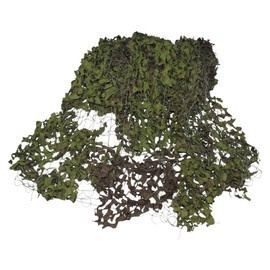
- CAMOUFLAGE NET - 3 x 4 m - DPM CAMO - BRITISH ARMY MILITARY SURPLUS - USED, the compact option for a hide, a shelter roof, or a garden corner you would rather nobody photographed.
- CAMOUFLAGE NET - 5 x 5 m - DPM CAMO - BRITISH ARMY MILITARY SURPLUS - USED, the generous version, for when you need to make something large politely disappear.
Forty odd years of service is a long career for any design. If you fancy owning a working piece of it rather than a photograph, have a look through our DPM shelves. The pattern has nothing left to prove, and neither will you once you are wearing it.
Products in this article
Recommended
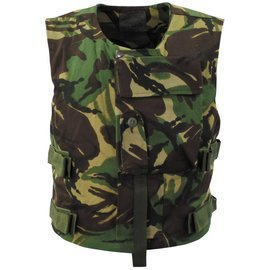
GB COMBAT VEST COVER - DPM CAMO - USED
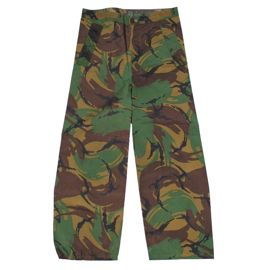
GB RAIN PANTS - RUBBERIZED - DPM CAMO - USED
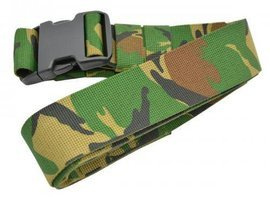
DUTCH ARMY WEBBING BELT - DPM CAMO
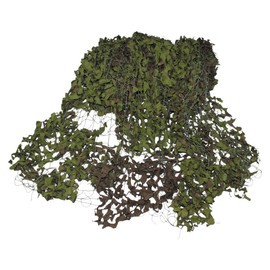
CAMOUFLAGE NET - 5 x 5 m - DPM CAMO - BRITISH ARMY MILITARY SURPLUS - USED